The Schwarzmanns
My cousin Anna Laurent, who lives in Paris, wrote about our shared ancestors for the journal La Revue russe. Anna is a serious person, and her article turned out to be serious too. I helped her put together the family tree. Her French was so elevated, with rare verb tenses and exquisite turns of phrase, that I barely got through it.
We all urged Anna to say in the article or its abstract that she was related to the people she was writing about. She flatly refused. “Those who need to know already know, and the rest have no need to.” When the article was already in proofs, I realized there was another important argument that had never occurred to me. A researcher undertakes to be accurate, check every fact and cite the documents. A relative is entitled to take liberties, tell family legends and pass on rumors and unverified stories. So now that I have undertaken the same work, drawing heavily on Anna’s article, I am quite open about the fact that this is my family. I am writing as a great-granddaughter and feel free to repeat my grandparents’ doubtful tales.
I spent a long time wondering how to tell this story without making my listeners’ heads spin from all the names. There were more than twenty people to keep track of. I decided to split my talk in two, one part on the Schwarzmanns and one on the Balakhovskys. The two clans are impossible to disentangle completely, of course, but I managed to separate them to some extent.
In the summer of 2018, I gave a talk called “The Philosopher Lev Shestov’s Sisters and Other Relatives” at the Pasternak Museum in Peredelkino, as part of the series “The Family Against the Backdrop of the Twentieth Century.”
The Schwarzmanns
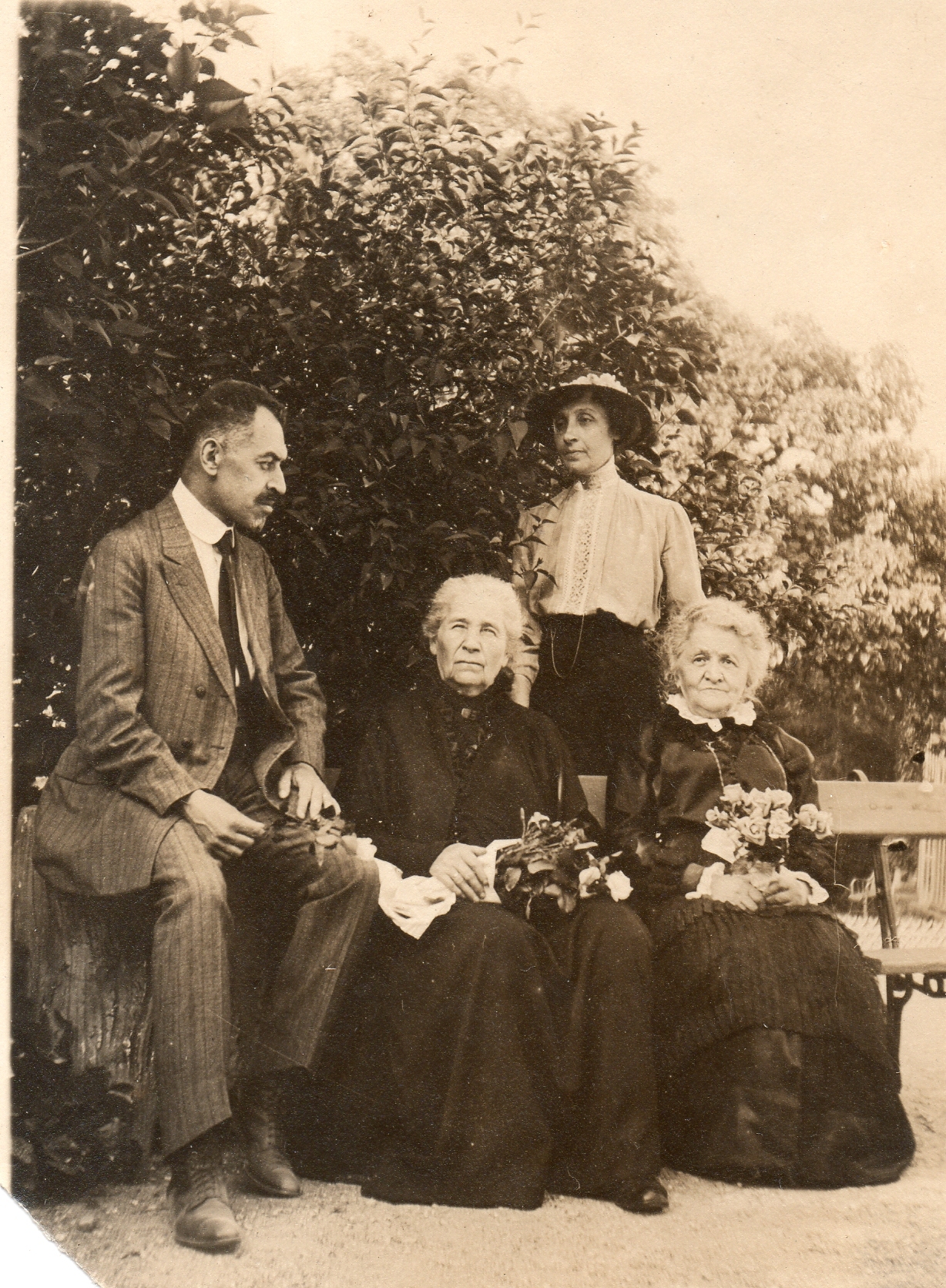
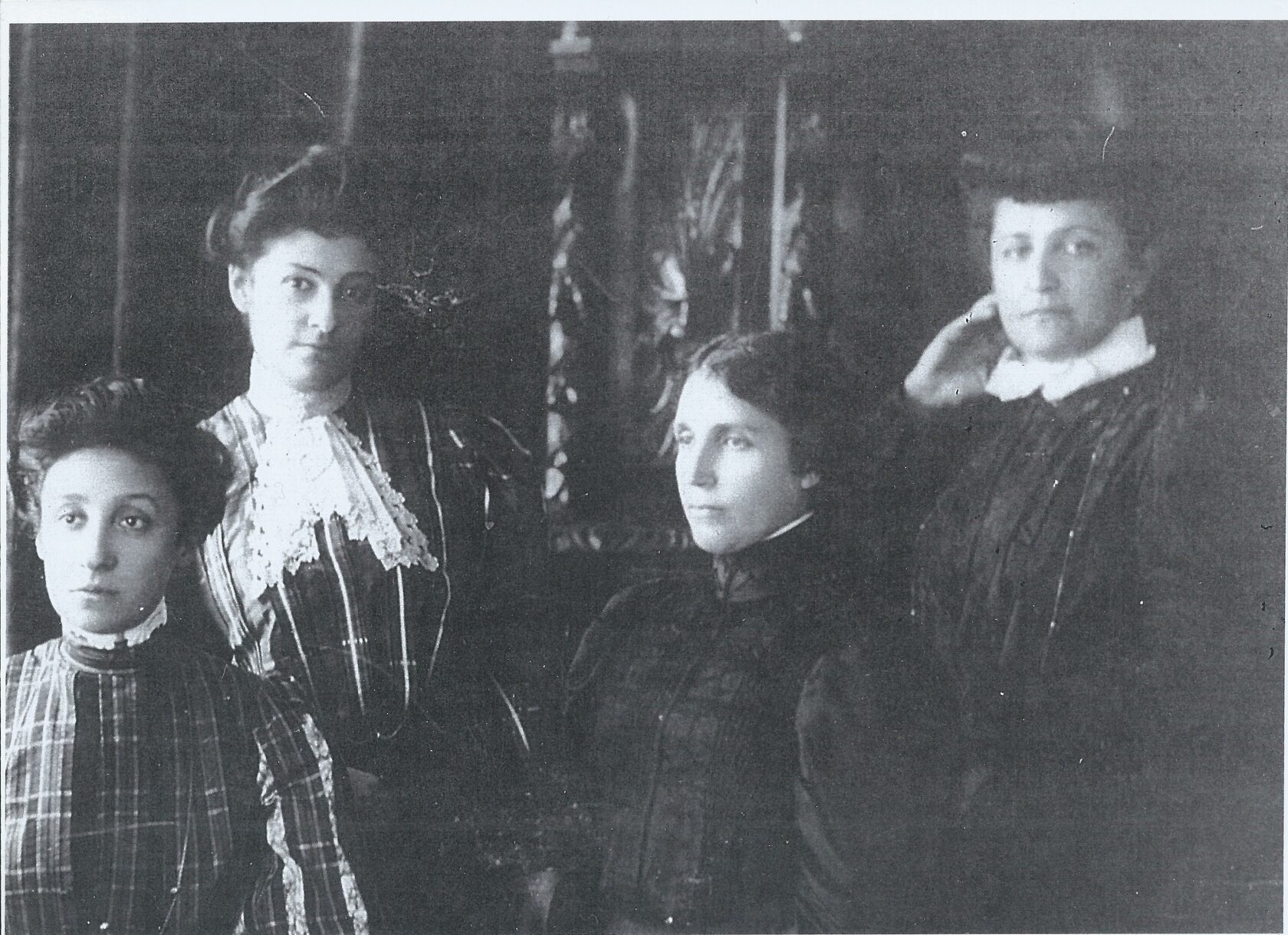
Let me begin with a photograph of the four Schwarzmann sisters. Unfortunately, we do not know exactly when it was taken.
The Schwarzmann family tree
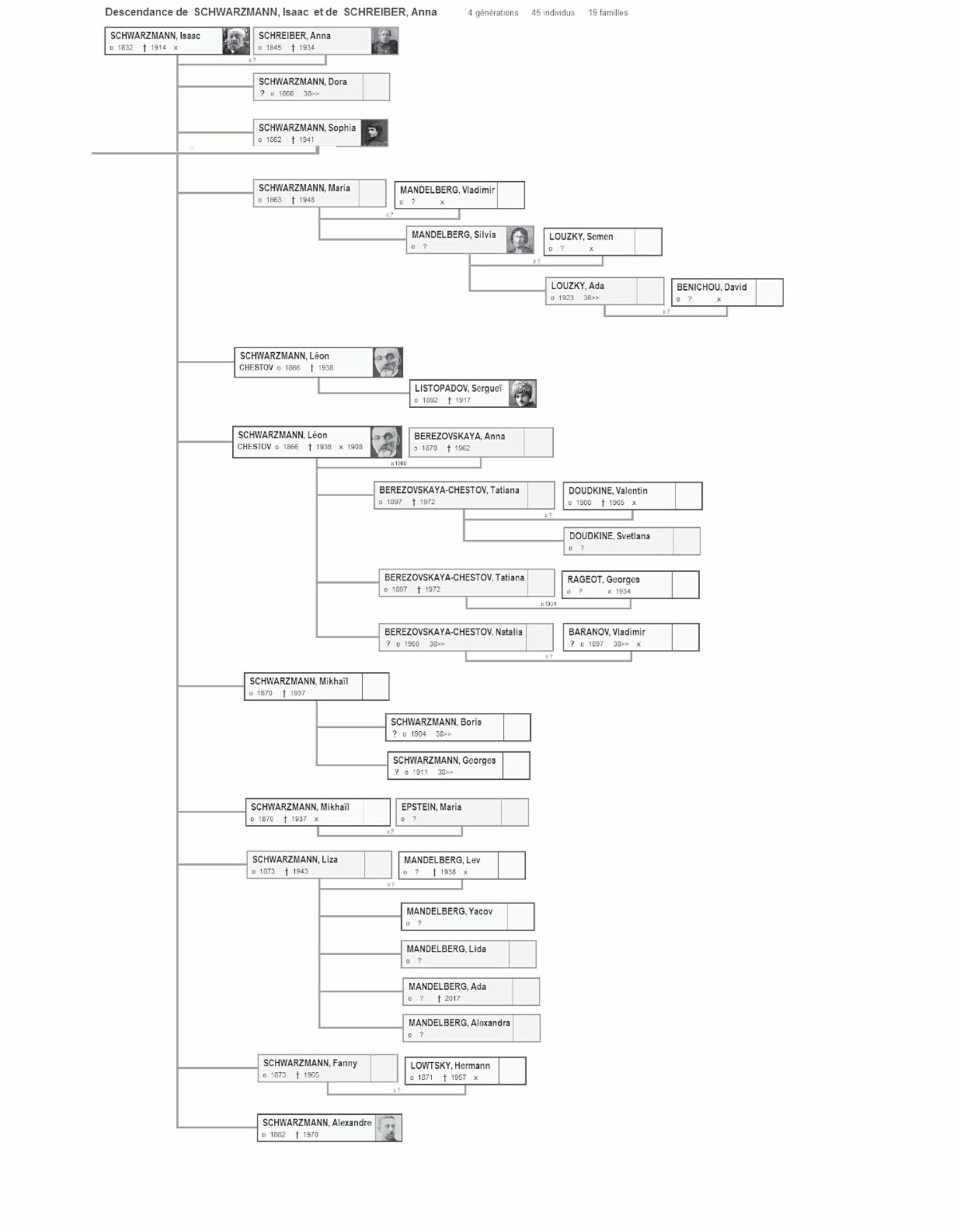
Lev Isaakovich Schwarzmann, better known as the philosopher Lev Shestov, actually had five sisters. Dora, the eldest, married a Russian, was cast out of the family and does not appear in the photograph. From left to right are Fanya, Liza, Sonya and Manya Schwarzmann. Sonya, or Sofia Isaakovna, became Balakhovskaya by marriage. She was Anna’s great-grandmother and mine.
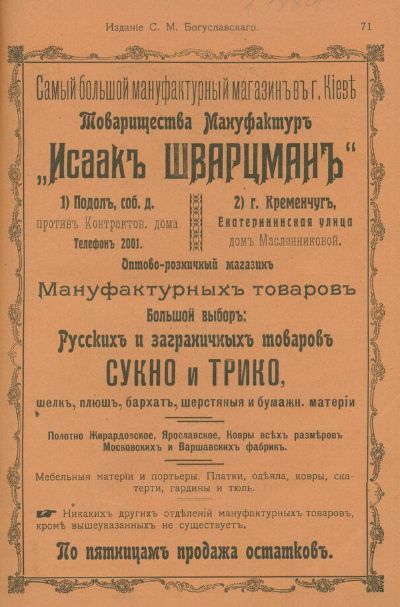
Their father, Isaac Moiseevich Schwarzmann, was a textile merchant in Kyiv. His estate stood in Podil, right by Contract Square, where, as the name suggests, deals were struck. A musical theater now stands on the site. Nikolsko-Naberezhnaya Street, onto which the estate’s service buildings faced, runs from the square to the Dnipro. The Soviet authorities renamed it after Hryhorii Skovoroda, perhaps because the Kyiv-Mohyla Academy stands opposite the Schwarzmann house.
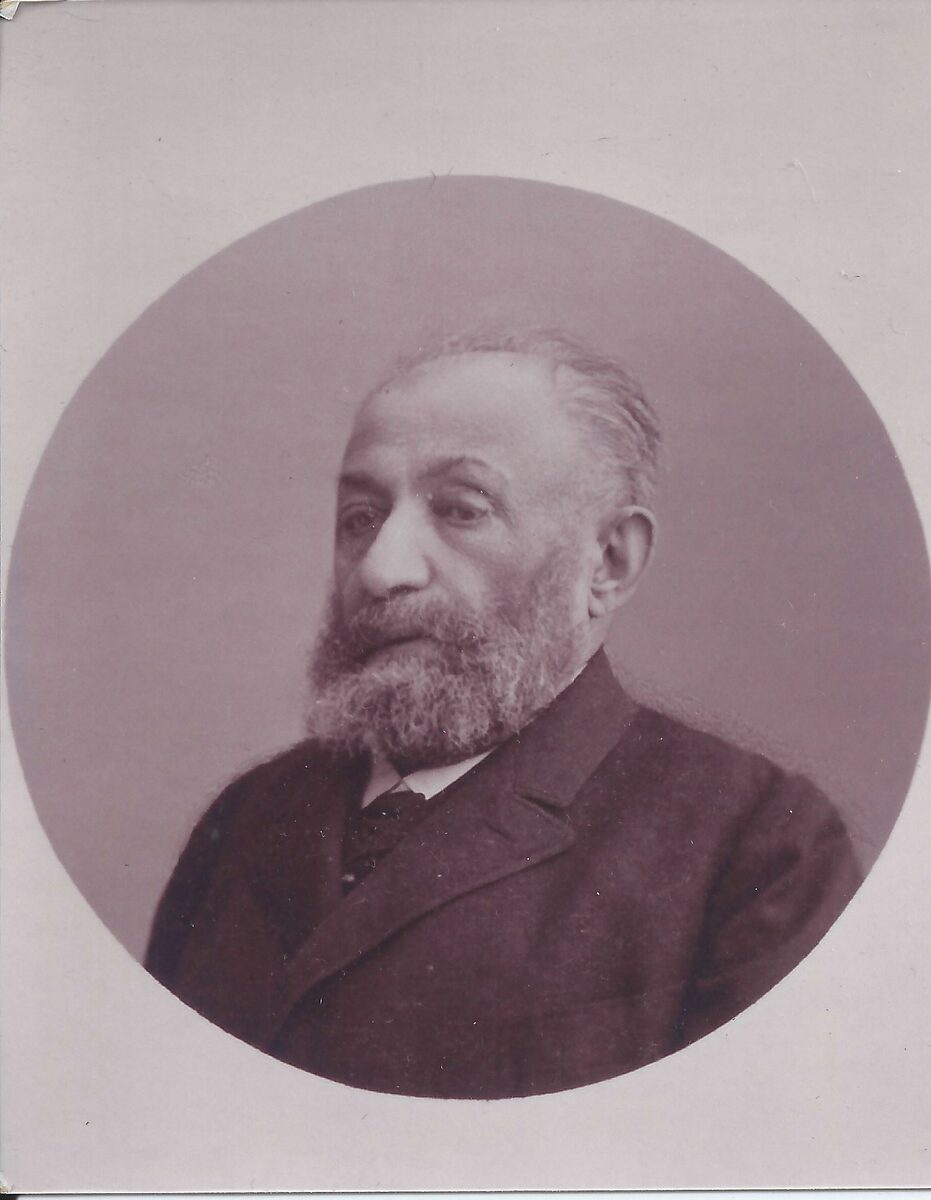
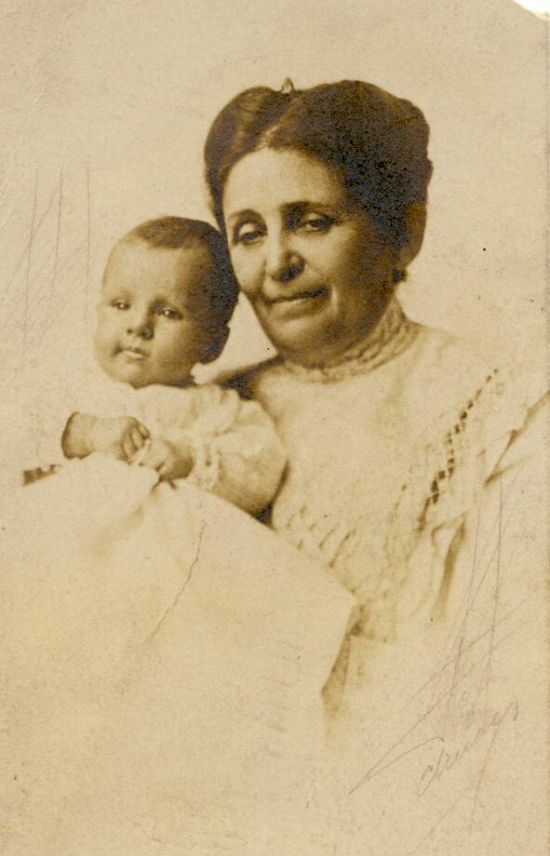
Isaac Moiseevich Schwarzmann had three younger sisters: Sofia (1839–1924), who married a Pritzker; Khaya (d. 1923), who married a Nakhman; and Antoinette (1857–1918), probably called Tova in her youth, who married a Reiss. They were Lev Shestov’s paternal aunts.
All three families emigrated to America in the early 1880s after the first anti-Jewish pogroms. One of Antoinette’s great-granddaughters, Jan Burns, was researching her family when she found my cousin Anna in Paris. Through Anna, Jan and I got to know each other, first at a distance and later in person when we were both in Paris. It was Jan who sent me the photograph of her great-grandmother.
There is a family legend about the eldest sister, Sofia Schwarzmann-Pritzker. After Alexander II was assassinated, it emerged that her eldest son Abraham, born in 1859 and then twenty-two, had been printing leaflets of some kind on a press at home. The story goes that his father, Yakov Pritzker, threw the press into the Dnipro, grabbed his son and left for parts unknown. Sofia, who was no longer young and had many other children (Mary, 1857; Sarah, 1895; Bessie, 1871; Louis and Nicholas, 1871), waited a long time. Finally, Yakov told her he had left for good and was waiting for her in America. She followed him there.
The website on the Pritzker family history tells us about Nicholas Pritzker’s mother Sofia. Aware of the situation of Jews in the Russian Empire in the late nineteenth century, she began raising funds to help immigrants come to the United States.
In an interview Penny Pritzker explained that in America her great-grandmother Sofia founded the Nickel Society to help other Jewish immigrants leave Eastern Europe and start a new life in the United States. Penny does not know exactly when the society was founded. Records suggest members gave five cents a week and sent the proceeds overseas to help Jews make the journey. Adjusting for inflation, five cents in 1914 would be worth $1.18 at the time of writing. Family history says the society later became the Orthodox Jewish Sheltering Home. Sofia and other Jewish women also founded the Ladies Aid Society to help immigrant families settle in their new country.
Sofia and Yakov’s son Nikolai, known in America as Nicholas (1871–1957), is said to have lived the American dream: he started out delivering newspapers and founded one of the largest fortunes in the United States. There is a story about his grandson Jay. While traveling, he stayed overnight in a small hotel. At breakfast his waitress told him the hotel was closing and she would soon be out of a job. Jay asked her to fetch the owner and immediately struck a deal to buy the hotel. In the most orthodox version, he wrote the check on a paper napkin. I find it more plausible that he wrote down his offer on the napkin. Either way, that was how the now-famous chain began. Jay changed the way the business was run and kept its name: Hyatt. In 1979 he and his wife Marian founded an architecture prize that many regard as the equivalent of a Nobel Prize.
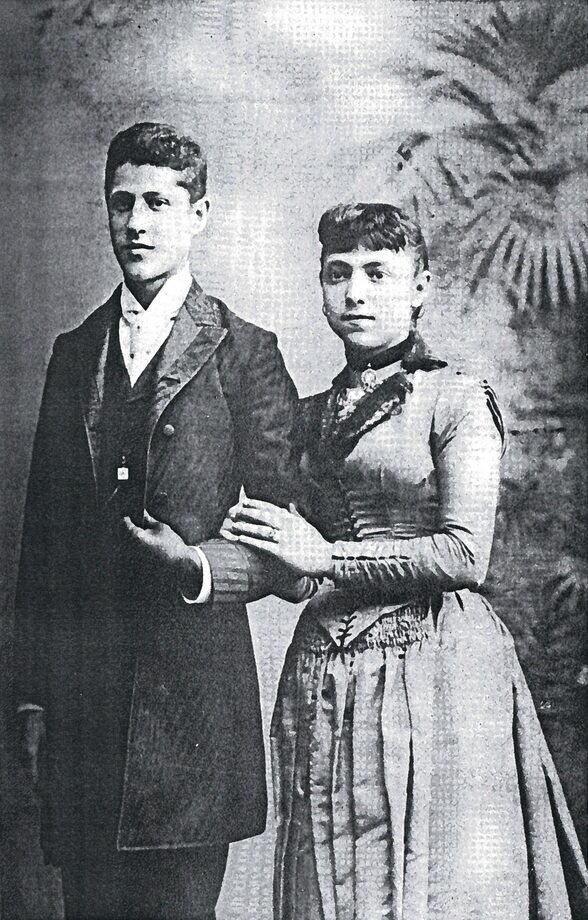
So Isaac Moiseevich Schwarzmann had three sisters whom we know quite a bit about. I think the odds of there having been another brother are extremely slim. Surely we would have heard something about him. I mention this because the well-known avant-garde painter Mikhail Matveevich Schwarzmann has been put forward as a descendant of that brother and a grandnephew of Lev Shestov. I would have loved to add a famous painter to our family tree, but alas, I cannot make it work.
Shestov had three children: Sergei Listopadov, born out of wedlock and killed in the First World War, and two daughters, Tanya and Natasha. Shestov’s brothers Alexander and Mikhail had sons about whom we know quite a lot, and none was named Matvei. The painter’s kinship with Shestov seems to be a legend, probably because Shestov was fashionable among avant-garde artists, partly because his work was banned in the USSR. According to the story, which even made its way into Wikipedia, the painter’s grandfather was Grigory, a cardiologist and Isaac’s half-brother. There is no evidence for this. Moreover, cardiology only acquired its name and became a discipline in its own right in the mid-twentieth century, about a hundred years after the hypothetical Grigory Schwarzmann lived.
One of the “ultimate” questions in Shestov’s philosophy, one of the most important questions in life, is whether what happened can be made never to have happened. The Soviet authorities solved it brilliantly without any philosophy. Destroy books and archives, shoot their authors if still alive or, at a pinch, drive them out of the country, then fence off the country itself with an iron curtain. Tell schoolchildren to tear the offending pages out of textbooks and encyclopedias and black out photographs that cannot easily be removed. In trickier cases, replace pages of encyclopedias. Multivolume encyclopedias came out over many years, and subscribers sometimes received replacement pages with the next volume. Religious philosophy, the category to which Shestov belonged, was incompatible with Marxism-Leninism, so the finest minds in Russian philosophy were expelled aboard the so-called Philosophers’ Ship.
Shestov was wise enough to leave of his own accord in January 1920, before the ship set sail. Philosophers who chose to stay were arrested a few years later, sent into exile and eventually shot. Yet even Stalin could not erase the past entirely. During the Thaw it emerged that many books had survived in restricted library collections. Ordinary mortals were barred, but those with a little skill and experience found ways to get hold of forbidden literature.
Most of what we know about the Schwarzmann family comes from The Life of Lev Shestov, written by his younger daughter Natalia Lvovna Baranova using the family archive. Many papers and letters survived years of exile, war and moves from country to country thanks largely to the dedication of Herman Lovtsky, husband of Lev’s younger sister Fanya. The two-volume book was published in Paris in 1983 by La Presse libre. Natalia then gave most of the archive to the Sorbonne library. The small portion that remained is in the care of her niece Catherine Scob, Tanya’s daughter.
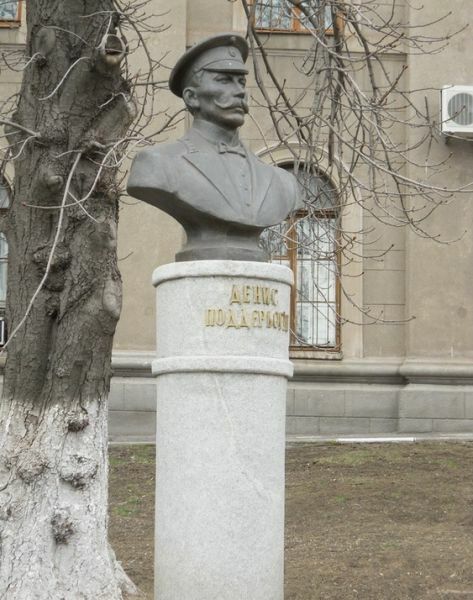
We know very little about Isaac’s eldest daughter Dora. Natache, as the French called Natalia Lvovna with their knack for stressing only the last syllable, devotes just three lines to her. In the early 1880s, “Dora, the eldest daughter of his first marriage, married a ‘goy,’ Denis Nikolaevich Poddergin, director of the technical school in Alexandrovsk and later in Nizhyn, and became a revolutionary. Her father broke off relations with her.”
The inventory of the Shestov papers at the Sorbonne lists “two letters from his sister Dora.” In their place is a slip of paper marked “missing.” Apparently the letters did once exist, which suggests that Dora and her siblings stayed in some contact. As for her husband, if the all-knowing Internet is to be believed, a monument to Denis Nikolaevich Poddergin stands outside the main building of the technical university in Zaporizhzhia. He founded the school once housed there.
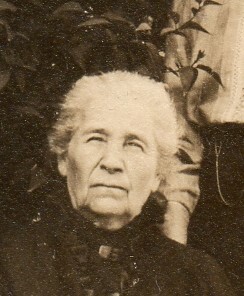
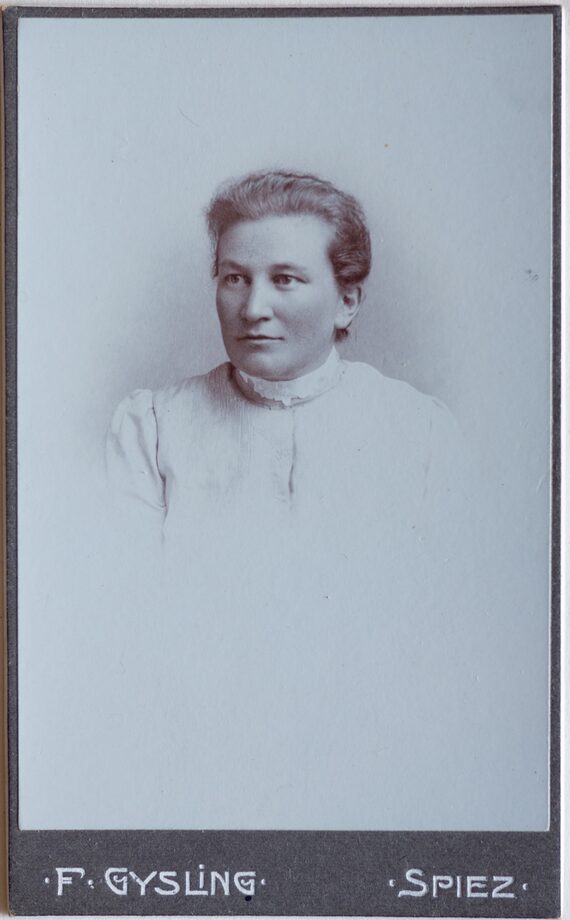
I still do not know Dora’s mother’s name or the cause of her death. My best guess is that she died in childbirth. Dora was probably about twenty when she married and left the family in the early 1880s, which would put her birth around 1860. Isaac’s second wife, Anna Grigorievna Schreiber, was very young when she married the thirty-year-old widower. We have no portrait of Anna in her youth, yet even a photograph of her with five grown children shows what a beauty she was. (Now where is that photograph?)
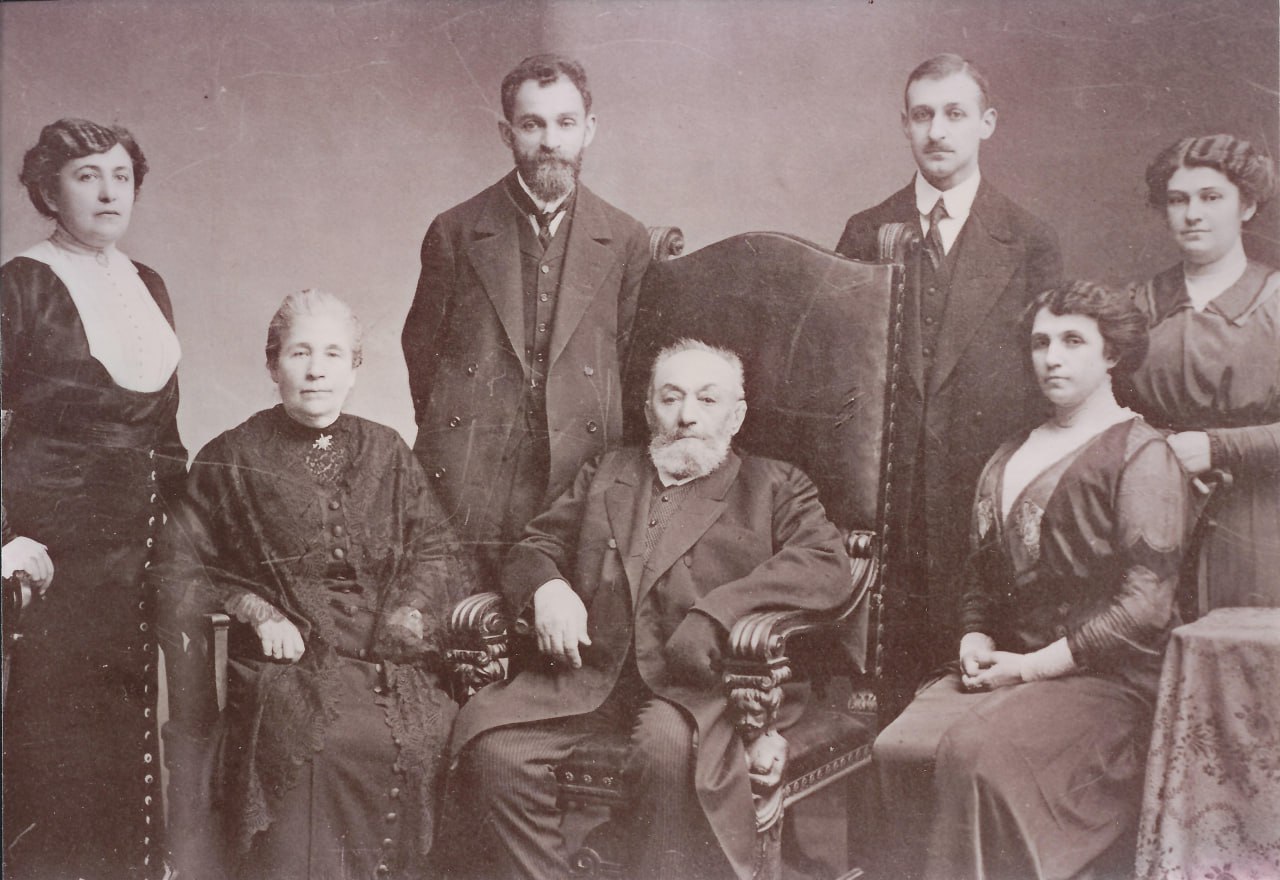
Children of Isaac Moiseevich (Gertsovich) Schwarzmann and Anna Grigorievna Schreiber
- 1862 — Sofia Isaakovna Schwarzmann-Balakhovskaya
- 1863 — Maria Isaakovna Schwarzmann-Mandelberg
- 1866 — Lev Isaakovich Schwarzmann-Shestov
- 1870 — Mikhail Isaakovich Schwarzmann
- 1873 — Elizaveta Isaakovna Schwarzmann-Mandelberg
- 1873 — Fanya Isaakovna Schwarzmann-Lovtsky
- 1882 — Alexander Isaakovich Schwarzmann
Anna was seventeen when her first child, Sonya, was born in 1862. Her second daughter Maria was born in 1863. The long-awaited boy arrived in 1866. He was named Yehuda Leib, Lev in Russian, and known at home as Lyolya, as his sisters called him for the rest of his life. Mikhail was born in 1870, the twins Liza and Fanya in 1873 and the youngest brother Alexander in 1882. Alexander was close to the Bakh family, and his photographs and letters survive in our archive.
All the children were musical. Sonya and Manya played the piano at nearly professional level. In exile, when they had to earn a living, Maria gave music lessons. At the end of his wanderings Alexander opened a music school in Tel Aviv. Lev had a fine baritone and considered an opera career. His voice proved too light, so he confined himself to making music at home.
Sonya
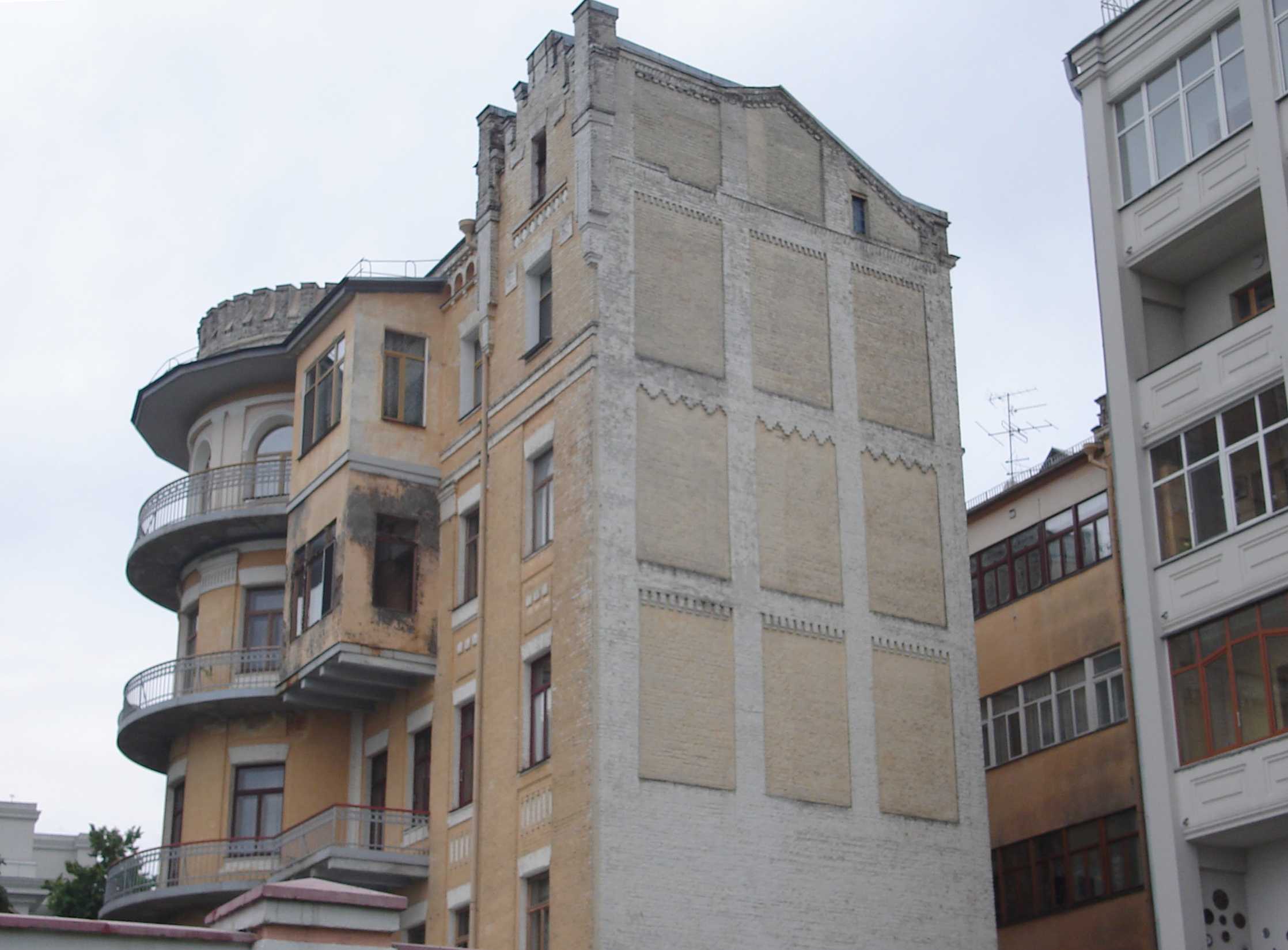
Sonya, Anna’s eldest daughter, married Daniil Grigorievich Balakhovsky, a sugar manufacturer. Danil, as the family called him, was very wealthy and a gifted manager. Some called him a millionaire. I have little sense of what a million rubles meant then, but at one point he bought the famous House with Chimaeras while it was still unfinished. He owned it only briefly before selling it again.
According to family lore, his father Grigory Gertsevich (or Gerts Gertsevich, or Grigory Grigorievich, oh, those Jewish names!) was a man of passions, gambling in particular. Sometimes he lost so much that when guests came he had to borrow chairs from the neighbors. Danil is said to have inherited his father’s passion, but his was for music. He supported musicians and organized concerts. When Scriabin was in Kyiv, he always stayed with the Balakhovskys.
The Balakhovsky family tree
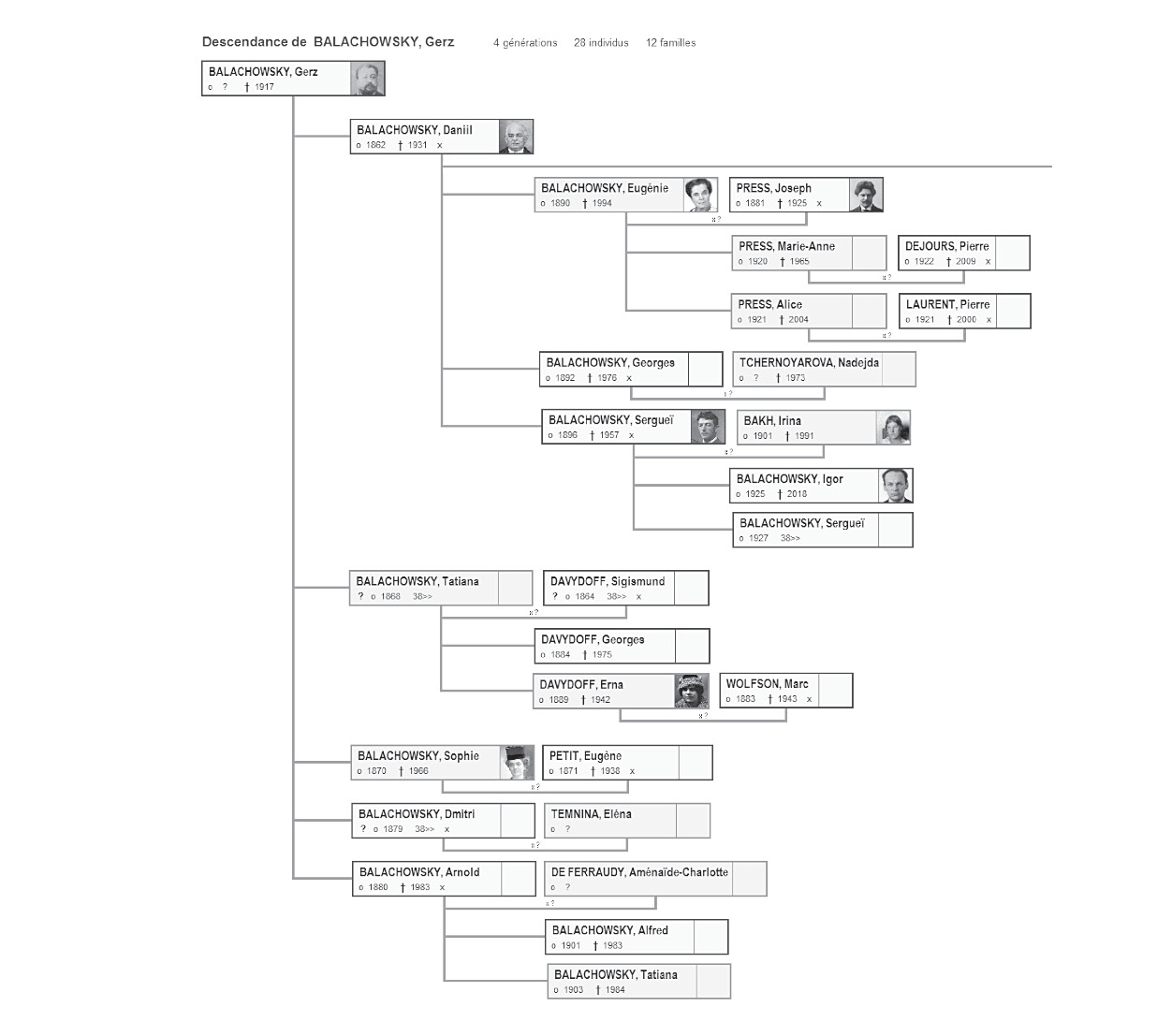
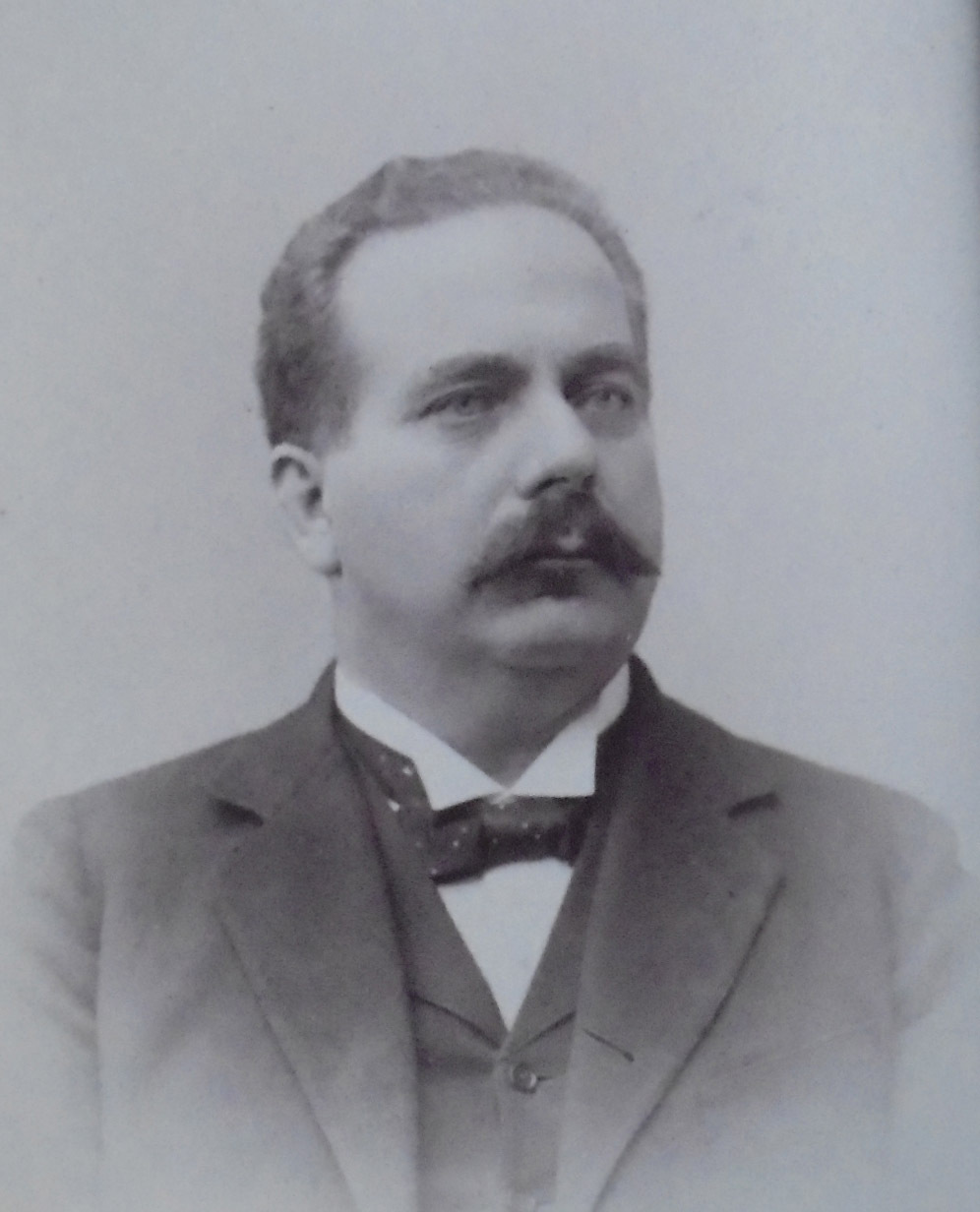
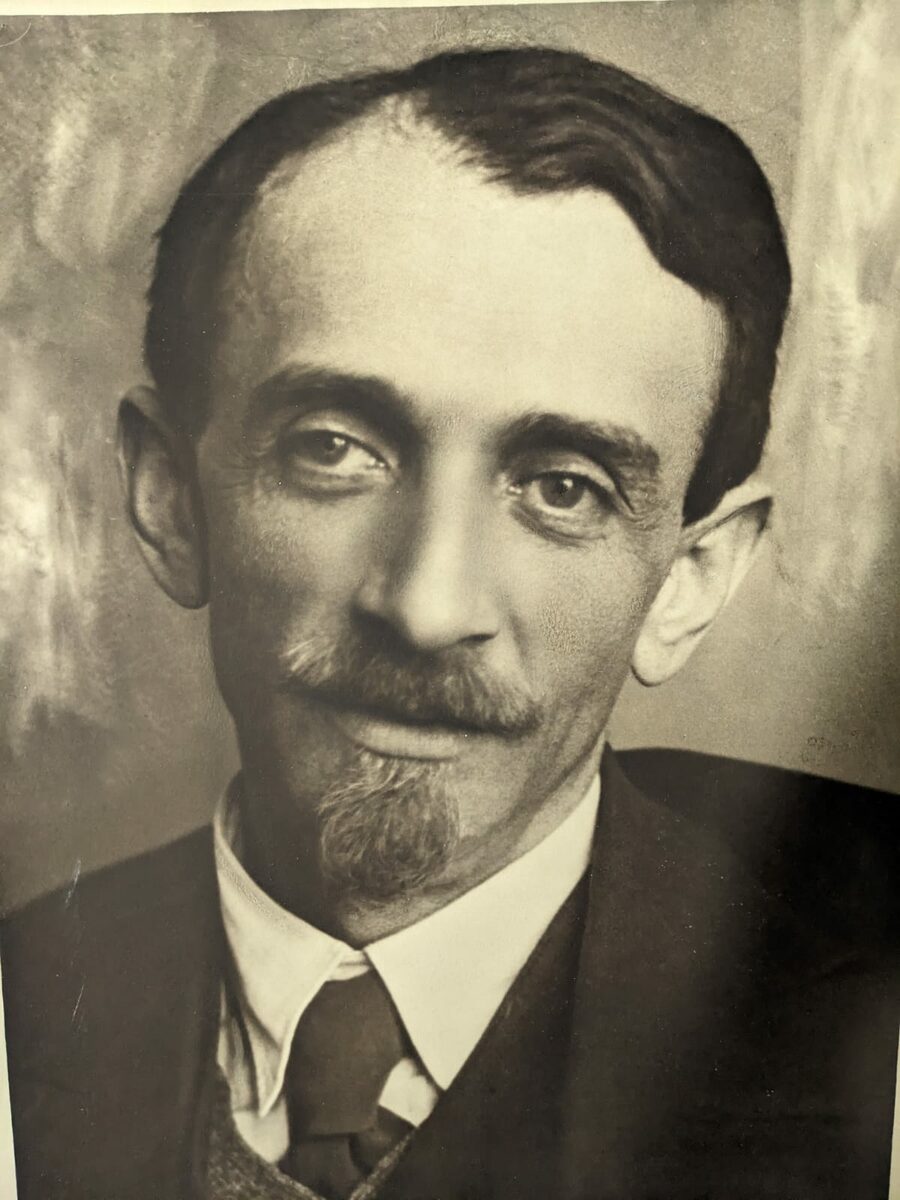
Sonya and Daniil had three children: Zhenya, born in 1890, Georges, two years younger, and Sergei, born in March 1896. Sergei alone lived in Russia, or more precisely in the USSR, and he became my grandfather. Georges studied engineering and found himself in Paris after the Revolution. He spent the rest of his life there and had no children.
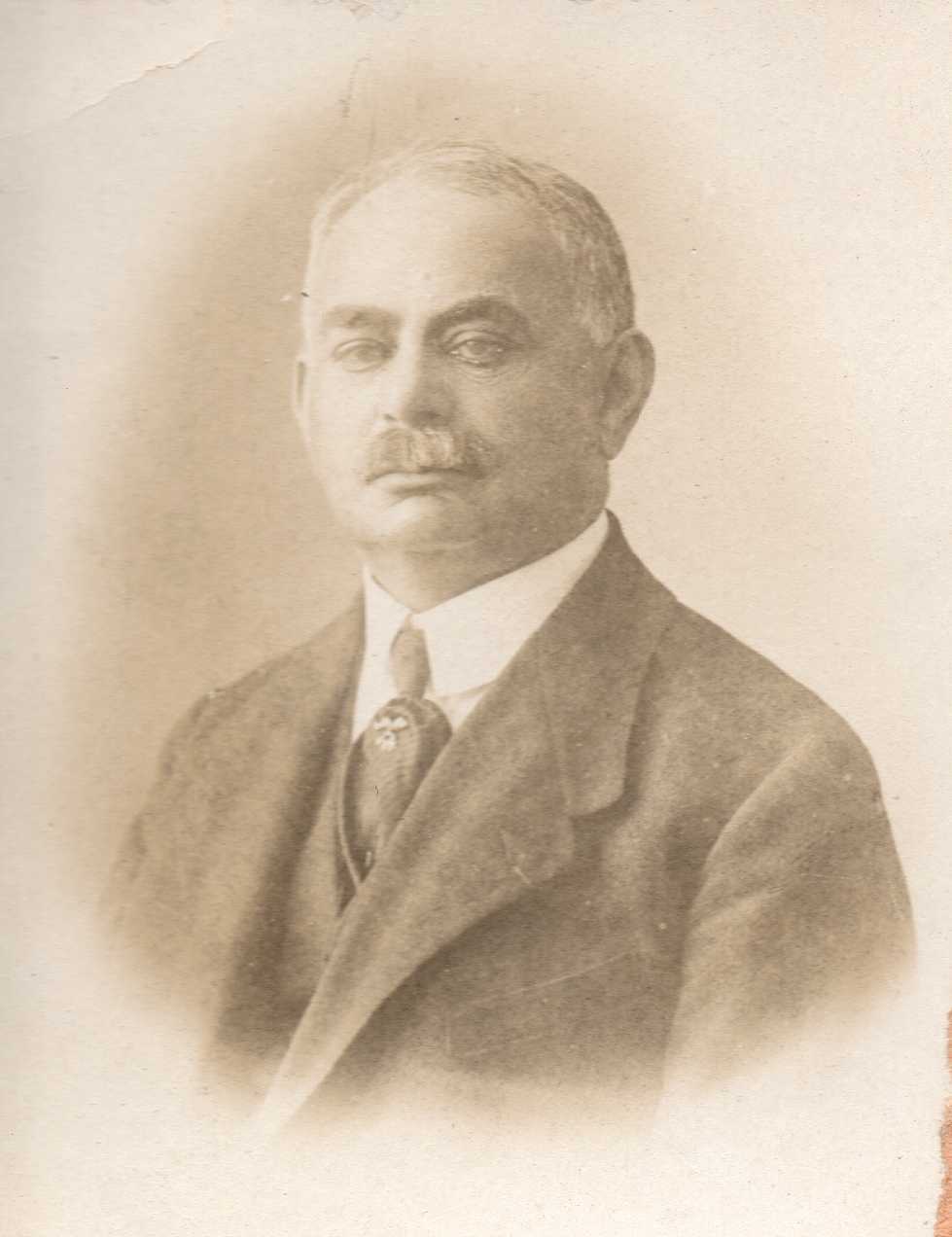
Georgy (Georges) Danilovich Balakhovsky (1892–1964)
In a way the Revolution brought Zhenya good luck. The new laws made it easier for her fiancé to get divorced, and in 1918 she married the distinguished cellist Joseph Press, ten years her senior. In the winter of 1919–1920 they left Russia with Lev Shestov. Zhenya was pregnant and caught Spanish flu on the ship, so she was put ashore in Genoa. But this was civilized Europe already, and Sonya quickly made it from Paris to help her daughter and deliver her first granddaughter, Marie-Anne.
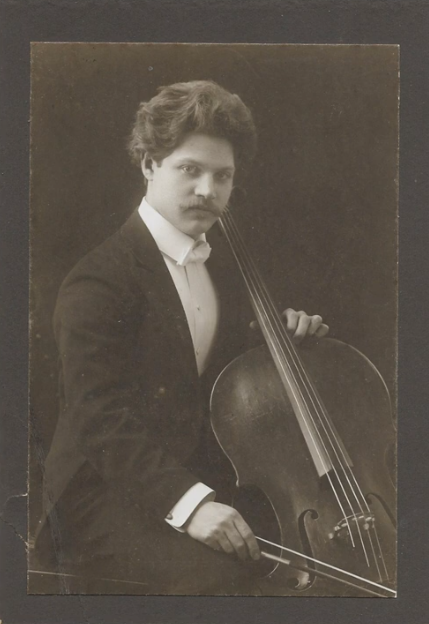
Europe was flooded with Russian refugees who had suddenly gone from being comfortably off to having to earn their daily bread. Relatives crowded into the Balakhovskys’ Paris apartment. Press, as Lev put it, “ran all over town with his cello” in search of work. Two years later a second daughter was born, Alice, my cousin Anna’s mother. Joseph soon found a good job in Rochester, New York, where George Eastman, the founder of Kodak, had built his empire. A music lover, Eastman had opened one of America’s finest conservatories, the Eastman School of Music. Press was invited to head its strings department.
Sadly, their happiness did not last. Returning from Europe in 1924, Press fell ill, again on a ship, and died suddenly. His grandchildren disagree as to whether he caught a chill or suffered some kind of poisoning. Wikipedia gives pneumonia as the cause. Devastated, Zhenya was ready to take her own life (there is a story about Christian Science here), but she held on and went to America with the children. She taught languages for several years at Wesley College in Boston. She returned to France in the mid-1930s and soon found herself living under the occupation. The girls, now grown, tried to hide the yellow stars sewn onto their clothes with their bags. Fortunately, this branch of the family came through safely.
Other members of the Balakhovsky family were less fortunate.
Danil’s sister Tatyana Balakhovskaya, my namesake, had a daughter, the artist Erna Sigizmundovna Davydova, who went by DEM (Davydova–Erna–Marc). She and her husband, the gallery owner Marc Wolfson, were caught in a roundup. They spent several days in the infamous Vélodrome d’Hiver, where Jews from across Paris were taken, and perished in the camps. It is said that at the start of the occupation Marc hid his collection with a friend, who betrayed him to the authorities.
When they came for Danil’s younger brother Dmitry Balakhovsky, he was out. They took his wife, even though she was not Jewish. For many years Dmitry refused to believe she was dead and tried in vain to find her.
Alfred (1901–1983), the son of another brother, Arnold Balakhovsky, was a professor of zoology and entomology. He was sent to Buchenwald in 1943 and assigned to a team working on a typhus vaccine. He helped several British officers survive by taking them into his test group as typhus patients. After the war he testified at Nuremberg.
Danil’s youngest son, Sergei, married Irina, daughter of the well-known revolutionary and Narodnaya Volya member Alexei Nikolaevich Bakh. Bakh spent many years in exile in Geneva, where the Bakh and Schwarzmann families got to know one another. Sergei began studying medicine at St. Vladimir University in Kyiv. In 1918 he moved to Paris with his parents, completed his medical studies and worked at the Pasteur Institute. After their marriage, Ira and Sergei lived in Paris at Sofia’s house. In 1925 they left for Moscow, where my father was born.
Manya and Liza
The sisters Maria (Manya) and Elizaveta (Liza) married two Mandelberg brothers. Four Mandelberg brothers are known, the most prominent being Avigdor Ovshievich, known in Russian as Viktor Evseevich (1869–1944).
A physician, writer, Menshevik and Trotskyist, he was exiled to Irkutsk in 1899. He represented Irkutsk in the Second State Duma and took part there in the 1905 Revolution. On several occasions he went abroad for long periods. In 1917 he returned to Russia and headed the health service in St. Petersburg. In 1920 he emigrated to Palestine, where he headed the League Against Tuberculosis. In 1941 he helped establish the Public Committee for Aid to the USSR, which supplied the Soviet Union with medical equipment.
Manya married Vladimir Evseevich and Liza married Lev Evseevich. Online sources have got the couples mixed up, and the error has spread from site to site. So don’t believe Wikipedia on this one. The couples really were Liza and Lev, Manya and Volodya.
Both brothers were doctors. After the First World War broke out they were called up and worked in hospitals in and around Kyiv. Natache’s book mentions another brother, Okulya. It is an odd name and I can find no other mention of him. She probably confused something. Wikipedia lists a fourth brother, Moisei (Moyshe). His son Yevgeny Moiseevich Mandelberg lived in the USSR from the mid-1920s and was a well-known theater designer.
Manya and Volodya had one daughter, Sylvia, known in the family as Lyusya. An artist, she lived in exile in Paris in the early 1920s and was friends with Lev Shestov’s daughters. She married the poet Semyon Lutsky.
I found a piece of cardboard in our family archive with this inscription:
“Easter 1916. Taken by Natasha Bakh on the day we met F. I. and H. L. at their house. A blessed day! That was the beginning of it all. I kiss my sweet, dear friend, my radiant little Lyusya. Your Syoma. Givors¹, September 7, 1922.”
A photograph must once have been glued to the card. It came off and could not be found. The inscription still tells us a great deal. In the spring of 1916 Semyon met F. I., Lyusya’s aunt Fanya Isaakovna, and H. L., her husband Herman Leopoldovich Lovtsky, and through them met his future wife. This was at the home of my great-grandfather Alexei Nikolaevich Bakh in Geneva. My grandmother’s sister Natasha took the picture. It is a small world, and it was smaller then.
Sylvia was seriously ill and died quite young, leaving Semyon their daughter Ada as a consolation. Father and daughter spent the war in southern France, in the unoccupied zone. The persecution of Jews made a deep impression on Ada, who became a Zionist. Here is an excerpt from Semyon Lutsky’s memoirs that I found online.
Exodus 1947
I have vivid memories of my daughter’s part in this affair and of my own involuntary involvement from the sidelines. So I will have to talk about myself as well as my daughter, awkward as that is. You cannot leave the words out of the song…
First I want to recall the main events of this “epic.” When the German extermination camps were opened, tens of thousands of wretched prisoners who had miraculously survived (I repeat: tens of thousands of half-living skeletons) began dreaming of reaching Palestine, then under British mandate. Some had nowhere else to go, while others went out of conviction. The Balfour Declaration, with its promise of a national home for the Jews, was received as a promise of paradise. But the British, keen to avoid a dispute with the Arabs, admitted only small quotas to Palestine.
The Jewish Agency then did what it could to organize unauthorized crossings. Small ships carrying hundreds of desperate people set out from France, Italy and Greece under the flags of various South American republics, hoping to evade British warships and land their human cargo on the shores of the Promised Land. Few made it, and the journeys often ended in tragedy. Some drowned. Others were intercepted by British ships and sent to British camps in Cyprus.
My dear Ada, an artist and a student at the Sorbonne who had become a committed Zionist, joined the Jewish Scout group Éclaireurs israélites. One day I will never forget, she told me:
“You know, this can’t go on. I can’t, I have no right to go on studying and thinking about myself when there is such injustice in the world. I’ve decided to leave university and go to Palestine.”
“I understand,” I said. “But how will you get there? The British won’t let you in.”
“I’ll do what the others are doing. I’ll try to get in without papers.”
“Why go without papers?” I replied. “We have an aunt² in Palestine who’s well connected. She can get you a visa from the British.”
My daughter put me to shame. “How can you say that? You want me to go on a comfortable ship with a visa in my pocket while so many poor people are crammed onto rickety boats in dreadful sanitary conditions and end up in Cyprus or drown? No, we young people have to help them.” I fell silent. She was right…
A few weeks later she left with a group of young Jews for the village of Laroche in southern France, where a model farm had been set up. They were to learn farming and Hebrew and get used to one another before setting up a new kibbutz in Palestine.
At Laroche she soon became engaged to a charming young Zionist, and they celebrated their wedding there. My mother, my sister and I went. It is hard to forget the peculiar atmosphere of that community of young, fervent believers. Even the farmers from the neighboring village took part, decking out their carts and cows with wreaths and flowers, “singing” Jewish songs and dancing.
Many of the farmers respected the group. Sometimes they would ask, “What are you doing here? You’re students. Why do our hard work?” When told these young people wanted to make themselves useful to a future Jewish state in Palestine, they could only marvel: “Is that even possible?” The decency of these ardent young people astonished them too. Their example even caught on in Catholic circles, and several similar farm villages were set up in southern France for French young people.
The day after my daughter’s wedding, a “mysterious” man with intelligent eyes arrived at the commune. He called a meeting, gave a short speech in Hebrew and disappeared. I learned later he was from the Jewish Agency and had told the young people to be ready to leave in two days.
After he left, I remember a tense silence. Everyone set about writing farewell letters to their families. We said goodbye and went to Vittel. There we received a brief note from my daughter. She and her husband were going on a long journey, a honeymoon, and we should not worry if no letters came for a while. Of course we understood, and from then on we devoured the news…
One fine day, as they say, I read a short item reporting that British warships had seized a vessel in the Mediterranean called “Dt Warf” with 4,500 Jewish emigrants aboard. The ship had been sent to a port in southern France where its human cargo was to be put ashore. They would be forced to disembark, the report said, and no one yet knew how the French government would react.
Another report said the unauthorized ship had been seized on the high seas after a fight in which many people were injured. The Jews fought off the boarding party with whatever they had, bottles and tin cans. The ship was rammed and taken to Haifa, where the passengers were transferred to three Liberty ships bound for a French Mediterranean port.
It was also reported that when the British warships surrounded the vessel, a blue-and-white Jewish flag with the Star of David was flown and the name “Dt Warf” replaced with “Exodus 1947”! This was a real challenge to Britain. As soon as I read it, I had no doubt my daughter, her husband and the whole Laroche group were aboard one of those ships, captive and behind bars. The outraged French press went so far as to write about a “floating Auschwitz”…
Ada eventually managed to get off the Exodus and return to France. She soon obtained a visa after all and left for Palestine with her husband, David Benichou. Her many grandchildren and great-grandchildren live in Israel. Ada herself lived a long life and died relatively recently at the age of ninety-five.
Lev (born 1866)
Lev Isaakovich Schwarzmann, better known as the philosopher Lev Shestov, is the most famous member of the family. Natache lists thirteen titles in his bibliography, and that is just the books. There are also a great many articles and lectures. As early as 1911, the Moscow publisher Shipovnik undertook an edition of his complete works as they stood at the time.
Books and articles about him are beyond counting. Yet all that literature concerns his philosophy, whereas I am writing about people’s lives. Here the sources are scarce. Besides Natache’s book, there are Herman Lovtsky’s memoirs, also largely devoted to Shestov’s ideas, and the recollections of people who knew him. Yevgenia Hertsyk’s account is the most interesting and detailed when it comes to everyday life.
Yehuda Leib Schwarzmann was born on January 31, 1866, according to the Julian calendar. At twelve, in 1878, Lyolya, as the family called him, was kidnapped by “some underground political organization.”
It is a murky story, and I have no idea what really happened. According to Natache’s book, “His father [Isaac Moiseevich] decided […] to resist political blackmail and flatly refused to pay the ransom. […] His firmness paid off, and after a while (some say six months!) a family friend, M. I. Kulisher, brought the emaciated twelve-year-old home, saying, ‘Here’s your Lyolya.’”³
In another version, the government forbade the family to pay. It is a strange story. I am also surprised that Shestov himself never mentioned it, since the important events of his life found their way into his writing in one form or another. His early works in particular were largely autobiographical.
Lev enrolled in Kyiv’s Third Gymnasium. Its building faces Contract Square and borders Andriivskyi Descent, one of Kyiv’s most famous streets. It still houses a school.
Natache writes that Shestov “became involved in a political affair and had to leave the school and transfer to Moscow. On graduating in 1884, he enrolled at Moscow University, first in mathematics and then in law. He spent one semester at Berlin University. After difficulties with the celebrated student inspector Bryzgalov, Shestov left Moscow University and returned to Kyiv, where he finished law school in 1889.”
His dissertation, Factory Legislation in Russia, was thought lost, but Anna found it in a Kyiv archive relatively recently.
“After university, Shestov registered with the bar in St. Petersburg, but never took a case and worked in law only very briefly in Moscow. […] In 1889 he volunteered for military service. For a short time he worked as an assistant to a barrister in Moscow. Soon afterward, in 1891 or 1892, he had to return to Kyiv […] to save the family business,” Natache continues.
Shestov’s movements during this period are unclear, though he evidently moved around a good deal. Neither letters nor documents from the time survive, and Natache relies on scraps from his “autobiography” and the memoirs of his friends. He undoubtedly spent a great deal of time away from Kyiv before 1892. His son Sergei, born out of wedlock, seems to have been born during this period.
Natache is more than brief about it.
“Shestov’s affair with the Schwarzmann family’s maid, Anyuta Listopadova, and the birth of his son Sergei out of wedlock, probably in 1892, also date from these years. Shestov was very fond of the boy and looked after him all his life. Sergei lived in Moscow with his mother and later with the family of a Moscow journalist. He finished secondary school there. It is not known whether he entered university before the war. He enlisted voluntarily, was awarded two Crosses of St. George and was promoted to ensign. He was killed in the war, probably in the spring of 1917. While on leave he visited the Shestovs in Moscow. On one such visit he met Boris Pasternak (Boris Pasternak, Safe Conduct, p. 80).”
According to Shestov’s Paris relatives, Natache did not want to mention Sergei in her book at all. They had a hard time persuading her that she had to. In the end she settled for a short passage that appears to be less than entirely accurate.
I very much doubt that Anyuta Listopadova, whose name is sometimes written “Listopad,” without the ending, really was the Schwarzmanns’ maid. Isaac would hardly have tolerated such a scandal under his own roof. Had it happened, he would have sent the offending servant far away and forbidden his son to look after the child.
The affair with Anyuta most likely took place in Moscow. The “Moscow journalist” with whose family Sergei lived was Ilya Nikolaevich Ignatov (1858–1921), a critic, publicist, theater scholar and member of the editorial staff of Russkie Vedomosti, as well as Prishvin’s cousin. He had two daughters, Tanya (1892–1957) and Natasha (1897–1972).
I think I should insert a photograph of the pastel.
Most likely, Anyuta Listopadova worked as a servant in the Ignatov household and stayed with them until her death. I find support for this in one of Gershenzon’s letters⁴, in which he sends Shestov greetings from the Ignatovs and Annushka. Then again, that might have been a different Annushka altogether…
Family photographs